


Florian Heigl
Tenth research article: Hedgehogs and badgers in Vienna
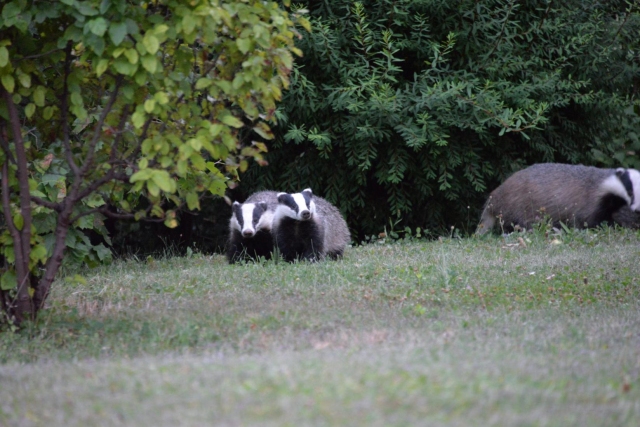
Some wildlife species can successfully adapt to urban environments. To prevent potential conflict of these species with humans or their pets, a better understanding of the presence of urban wildlife is needed. However, traditional monitoring methods are often inadequate because many privately owned properties are inaccessible. In this study, we analyse reports of European hedgehogs (Erinaceus europaeus or E. roumanicus) and badgers (Meles meles) provided by two long-term citizen science projects in the city of Vienna, Austria – stadtwildtiere.at and roadkill.at – to assess habitat preferences and potential ecological interactions. Vienna has a human population of about 2×10⁶ and covers an area of 415 km2, 50 % of which is green space in the form of forests, parks and private gardens. A total of 356 hedgehog and 918 badger sightings were reported between 2012 and 2023. Sightings of both species were positively associated with a mix of sealed/built-up areas and green spaces with meadows and shrubs. However, sightings of both species were negatively associated with arable land, most likely due to the avoidance of open terrain, reduced food availability or simply because both nocturnal species were more difficult to spot on dark arable land. The steeper the slope of a habitat, the fewer hedgehogs were reported, whereas for badgers, a positive correlation between slope and reports was observed in areas with built-up fractions over 15 %. Overall, we observed hardly any hedgehog reports in areas in which badgers were reported. We conclude that citizen science wildlife monitoring can be a good data source to better understand human–wildlife interactions and could therefore be a model for other urban areas and species.
Here you can read the full research article: https://we.copernicus.org/articles/25/177/2025/
Completed projects
GeRoKi: Genetic evidence and roadkill hotspot analysis of vertebrate species killed on selected roads in Lower Austria
- Duration: 2 May 2023 – 1 May 2024
Funding body: Province of Lower Austria
Our landscape is criss-crossed by roads, which often pose a danger to wild animals and result in the loss of their habitat. However, reliable data on the number of animals that regularly fall victim to road traffic is lacking in Austria, especially for species that are not hunted.
Since 2014, the Roadkill Project has been collecting roadkill data with the help of dedicated citizen scientists. However, two major challenges have emerged in the process.
- Reports are usually made randomly rather than systematically.
- It is often difficult to identify animal species from photographs.
This is precisely where the GeRoKi research project came in. The aim was to find out whether the data collected was sufficient to identify so-called roadkill hotspots – i.e. sections of road where a particularly large number of animals are killed – and whether the animal species could be clearly identified using DNA from blood residues on the asphalt.
Between July and October 2023, five road sections in Lower Austria were cycled three times a week. The researchers found 885 roadkill animals. In addition, citizen scientists reported 110 roadkills on the same routes. 166 blood samples were sent to the Natural History Museum in Vienna for genetic analysis.
The results are promising:
-
DNA samples obtained from either fresh or dried blood allow for a much more accurate identification of species than visual methods.
-
Hotspot analyses show that hotspot locations vary depending on the survey method used, but they usually reflect the habitat requirements of the species in question.
-
If used in a structured and supervised manner, citizen science has great potential for researching the effects of roads on biodiversity.
At the same time, monitoring by bicycle revealed practical challenges, e.g. in dealing with road traffic, which should be taken into account for future projects.
Conclusion: GeRoKi proves how valuable cooperation between science and society can be – not only to highlight species loss, but also to develop new methods for species conservation.
Scientific publishing with citizen scientists
- Duration: 2 February 2021 – 1 February 2023
- Funding body: Austrian Science Fund (FWF)
Science does not have to take place behind closed doors – it can be open, transparent and collaborative. This is precisely what we pursued with our innovative approach in the project "Scientific Publishing with Citizen Scientists".
Since 2014, dedicated citizen scientists have been collecting data on animals killed in road traffic as part of the Roadkill project. By 2021, over 800 citizen scientists had reported more than 13,000 animal finds – via app or via the website roadkill.at. This valuable data not only helped with species conservation, but also with the scientific analysis of the impact of roads on animals.
But we wanted to go one step further and enable citizen scientists not only to collect data, but also to participate in the entire scientific process, starting with the formulation of the research question. That is why we worked intensively on this project to greatly expand the opportunities for citizen scientists to participate in the project, and as a result, starting in spring 2022, it was be possible to:
- Ask research questions
- Report roadkill
- Check roadkill
- Analyse roadkill
- Publish openly
This so-called pre-print approach pursued three central goals:
- Timely feedback for citizen scientists
- Rapid dissemination of new findings
- Participation and involvement in the research process
This open exchange allowed new research questions to arise directly from the observations of citizen scientists. At the same time, it strengthened the scientific competence of the participants and promoted a culture of collaborative research.
Three time levels – one joint process
From this point onwards, collaboration with citizen scientists took place on three interrelated levels:
- Real-time data & tools:
Citizen scientists use current data from the Roadkill Project and simple analysis tools. This allows them to develop their own questions and identify initial distribution patterns. - Quarterly updates:
Every three months, we publish comprehensive analyses, for example on which species were reported particularly frequently, how many protected species were affected, or how active the citizen scientists were during this period. - Annual in-depth analyses:
Specific research questions were formulated together with citizen scientists. We then analysed, for example, the influence of road type or the surrounding landscape on the occurrence of roadkill.
Conclusion:
The pre-print approach opened up the scientific publication process in the project. This was not only innovative, but also an important step towards participatory, vibrant and future-oriented science.
AnimalProtect - Detection of impact corridors influencing animal accidents along road networks
- Duration: 1 September 2018 – 31 October 2020
- Funding body: Austrian Research Promotion Agency (FFG)
The AnimalProtect project had a clear goal: to identify accident risk zones for wild animals at an early stage in order to prevent collisions between vehicles and animals. Using remote sensing data and geographic information systems (GIS), the project team developed an innovative approach to predicting wildlife accidents – scientifically sound and practical.
The four central project objectives:
- Identification of relevant influencing factors
Specific factors influencing the risk of wildlife accidents were determined for twelve animal species, such as landscape structure, vegetation, road type and seasonal migration patterns. These factors were recorded in a heat map that showed their influence on a scale from -2 (risk-reducing) to +2 (risk-increasing). - Derivation of risk zones using remote sensing
Based on validated influencing factors and current remote sensing and GIS data, risk zones for wildlife accidents were calculated in four selected test regions. This resulted in a detailed picture of potentially dangerous road sections. - Calculation and validation of risk corridors
The calculated risk zones were compared with existing wildlife accident data and converted into so-called impact corridors – areas where animal movements overlap with the road network. The lack of absence data (i.e. areas without wildlife accidents) posed a challenge for statistical validation. - Development of a cloud-based service and an app
An online service was set up to provide current risk zones. This data was integrated into a demonstration app that showed users the risk of wildlife accidents for certain animal species along their route on a five-point scale.
Results
The project demonstrated that risk zones for wildlife accidents can be successfully modelled using modern technologies such as remote sensing and GIS. The app developed clearly demonstrated how this information can be used in practice to reduce the risk to humans and animals. Despite delays caused by the pandemic, the project results were disseminated among experts, in workshops and through media appearances.
Challenges and further needs
The COVID-19 pandemic made cooperation difficult at times, especially when it came to on-site appointments and events. It also became clear that systematic collection of absence data is necessary to further improve the validity of the models.
Conclusion
AnimalProtect has made a pioneering contribution to the protection of wild animals in road traffic. The project laid the foundation for more precise risk analyses, targeted protective measures and innovative applications – for example in navigation systems, traffic planning and environmental monitoring.
Ongoing research
Animal roadkills in Austria between 2014-2021: associations between hotspots, land cover and road types based on citizen science.
(submitted as a manuscript to a scientific journal)
Road traffic poses a major threat to biodiversity, but the exact causes of roadkill – animals killed by vehicles – are still poorly understood, especially on a supraregional level. This study examines how different landscape types and road types influence the number of animals killed by vehicles in Austria. The focus is on seven frequently reported species: common toad, green toad, grass snake, brown hare, hedgehog, squirrel and blackbird.
The data comes from the citizen science project 'Roadkill', in which volunteers reported a total of 3,370 dead animals between 2014 and 2021. The surrounding area of each location within a radius of 250 metres was examined based on land use data (CORINE) and road data from OpenStreetMap.
The analysis shows that the probability of roadkill depends heavily on the animal species, the environment and the type of road. Agricultural land in the surrounding area increases the risk for five of the seven species. Urban areas, on the other hand, usually reduce the risk. Many dead animals were found on tertiary roads and pavements in particular. Primary link roads only led to an increased risk for hedgehogs.
The results show that different species are affected to varying degrees depending on their habitat and the type of road. Therefore, it is important to implement targeted measures that consider these differences in order to protect wild animals.
Habitat use and co-occurrence of badgers (Meles meles) and hedgehogs (E. europaeus & E. romanicus) in Vienna. A citizen science approach
(submitted as a manuscript to a scientific journal)
Some wild animals can adapt well to life in the city. In order to avoid conflicts with humans or pets, it is important to know where these animals are. However, traditional methods of animal observation often have limitations, as many properties are privately owned and cannot be entered.
This study therefore evaluated observations of hedgehogs (Erinaceus europaeus or E. roumanicus) and badgers (Meles meles) that were collected as part of two long-term citizen science projects in Vienna: Stadtwildtiere.at and Roadkill.at. Vienna has a population of around two million and covers an area of 415 km², approximately half of which consists of green spaces, including forests, parks, and private gardens.
Between 2012 and 2023, a total of 356 hedgehog sightings and 918 badger sightings were reported. Both species were mainly seen in areas where sealed surfaces (e.g. roads and buildings) were mixed with green spaces, such as meadows and shrubbery. Farmland, on the other hand, was mostly avoided – presumably either because these open areas offer less food, or because the animals are more difficult to spot there at night.
The influence of slope gradient is also interesting: the steeper the terrain, the fewer hedgehogs were sighted. With badgers, however, the opposite was true: in more built-up areas with over 15% sealed surface area, the number of badger sightings increased with increasing slope gradient. Notably, hedgehogs and badgers were rarely reported in the same area. This could indicate competition or different habitat requirements.
Conclusion: Citizen observations provide valuable data for a better understanding of the behaviour of wild animals in cities. This knowledge could help avoid conflicts and serve as a model for similar studies in other cities.
Comparison of roadkill from presence-only reports and regular monitoring in relation to the surrounding landscape influences
In the Roadkill project, citizen scientists use the Roadkill app or the project's online form to document random sightings of roadkill on Austria's roads. These reports provide valuable data for gaining an overview of the occurrence of roadkill. However, as these are random findings, they may not be representative of the entire region due to their uneven temporal and geographical distribution. In contrast, regular monitoring systematically covers specific areas and thus provides a more reliable basis for statistical evaluations.
Between July and October 2023, as part of the regular monitoring programme, a standardised survey was conducted: five 10-kilometre sections of road in Lower Austria were checked three times a week by bicycle. For each instance of roadkill, the date, time, coordinates, a photograph, the taxon, the number of animals and the mode of transport were recorded. Additionally, landscape mapping was carried out along all five sections of road within a 100-metre buffer zone. The surrounding landscape was analysed within a 100-metre radius around each documented roadkill. The study aims to investigate whether reports collected so far by citizen science regarding the landscape surrounding roadkill lead to comparable results to those of the systematically collected monitoring data.
The role of DNA analysis in identifying roadkill – differences between randomly and regularly collected data on selected routes in Lower Austria
As part of the Roadkill Project, citizen scientists collect data on vertebrate roadkill on Austria's roads. This data is particularly valuable as official agencies usually only document reports on species that are relevant to hunting. One of the study's aims was to determine whether blood samples collected at the roadside near roadkill are suitable for genetic species identification, particularly for species that are difficult to identify, small, or endangered.
As part of a non-invasive DNA sampling programme, blood samples were collected three times a week between 1 July and 31 October 2023 from fresh or dried blood in the immediate vicinity of roadkill on five 10 km stretches of road in Lower Austria. The focus was on animal species that are difficult to identify externally or enjoy special protection status. The samples were analysed in the laboratory of the Natural History Museum Vienna (NHM).
Inventory of rare/endangered/invasive wildlife species using citizen science, using the example of the European hamster in Lower Austria
Background: The European hamster is threatened with extinction throughout its entire range. Among other things, this is due to modern agriculture with predominantly monoculture fields. Various measures, or a combination of different measures, such as creating field margins, leaving crop strips in the fields, refraining from using poisons to control field mice, and regulating predators, are promising for the protection and conservation of this species. However, in order to protect the European hamster, it is essential to know where the animals are located.
This research investigated the effectiveness of mapping hamster populations based on sightings reported by members of the public on reporting platforms, in the spirit of citizen science projects.
Method: In the summer of 2023, 10 areas in Lower Austria where there had been reports of European hamsters from the citizen science projects roadkill.at or naturbeobachtung.at, as well as 10 other areas where European hamsters could potentially occur due to habitat conditions, were investigated with the help of a specially trained Border Terrier hamster tracking dog. All publicly accessible roads and paths within a 500-metre radius of the sighting locations in these areas were inspected. Inhabited hamster burrows were identified, and the land use of the plots within the radius was documented.
Hedgehog roadkill in Austria
Hedgehogs are among the animal species that are most frequently killed in road traffic accidents (Rondini & Doncaster, 2002). Data from the Roadkill App shows that they are the most frequently reported type of roadkill, accounting for almost 20% of all reports.
This study aims to answer the following questions: Where are the hotspots for hedgehog roadkill in Austria? What does the environment of these road sections look like, and to which land use category can it be assigned? In which months does hedgehog roadkill occur? Does this correspond to the increase in hedgehog roadkill in summer and in populated areas described in existing literature? What countermeasures could be suitable for reducing hedgehog roadkill?
2025/01 App Update
Es gibt ein App Update!
Was ist neu?
* Die Liste der Kleinsäuger und der Amphibien wurde euren und den Wünschen der Moderator*innen angepasst
* Persönliche Statistiken: filtere deine eigenen Beobachtungen.
* Bug Fixes und Verbesserungen.
Ö1: Vom Leben der Natur
Diese Woche sind wir von Mo-Fr um jeweils 8:55 Uhr zu Gast bei der Ö1 Sendung "Vom Leben der Natur" und berichten darin vom Projekt Roadkill, den Anfängen, Mitmachmöglichkeiten und Hintergründen. Wir haben die Links zum Nachhören in unserem Blog gesammelt.
neue Kooperation: NÖ Umweltanwaltschaft
Wir freuen uns sehr, die Niederösterreichische Umweltanwaltschaft als Partnerin im Projekt Roadkill gewonnen zu haben. Sie ist in der Lage, die von uns gesammelten Daten und Informationen als Partei in verschiedene Verwaltungsverfahren einzubringen und – darauf aufbauend – Schutzmaßnahmen einzufordern.
NÖ Umweltanwaltschaft

The Office of the Environmental Ombudsman of Lower Austria (Niederösterreichische Umweltanwaltschaft) is located at the seat of the Lower Austrian Provincial Government in St. Pölten. It acts on the basis of a constitutional provision, is independent and non-partisan. In addition to promoting strategically important projects in the field of ecology in Lower Austria, it is also authorised to represent the interests of environmental protection in administrative proceedings. In doing so, it exercises the rights conferred on it by provincial legislation (such as the Lower Austrian Nature Conservation Act) or federal legislation (such as the Environmental Impact Assessment Act).
We are delighted to have the Environmental Ombudsman of Lower Austria as a partner in the Roadkill project. It is in a position to introduce the data and information collected by us as a party in various administrative procedures (such as nature conservation procedures or environmental impact assessment procedures) and - based on this - to demand protective measures. At the same time, it is our interface with the official nature conservation experts and the Nature Conservation Department of the Province of Lower Austria. Our activities and data are therefore of great importance for nature conservation practice.
Nature conservation means protecting people. The Austrian Environmental Ombudsmen protect the basis of life for all of us - for us and for future generations. Your work is more important than ever.
Der Frühling erwacht
Der Frühling naht, und mit ihm beginnt die Wanderzeit unserer Amphibien. Ab Ende Februar machen sich die ersten Frösche und Kröten auf den Weg zu ihren Laichgewässern, geleitet von Landschaftsstrukturen und rufenden Männchen. Meist starten die Springfrösche als Erste – ein sicheres Zeichen für den Frühlingsbeginn. Achten Sie in nächster Zeit daher besonders auf wandernde Frösche und Kröten auf Straßen!
Bitte melden Sie uns weiterhin überfahrene Tiere! Wenn Sie lebende Amphibien sehen, können Sie diese gerne an Partnerprojekte auf Österreich forscht melden, wie z.B. AmphiBiom oder Gartenfreunde.
Buch Wien Podcast
Wir waren ja im November auf der Buch Wien zu Gast und hatten einen Workshop zu Forschungsfragen im Projekt Roadkill. In der neuen Folge des Podcasts "Wissen macht Leute" gibt es nun Eindrücke aus dem Workshop und der Science Lounge zum Nachhören.
Jahresanalyse 2024
Die Jahresanalyse 2024 ist nun online. Einen Einblick gibt unser Blogbeitrag dazu.
