


Florian Heigl
Fifth scientific article published
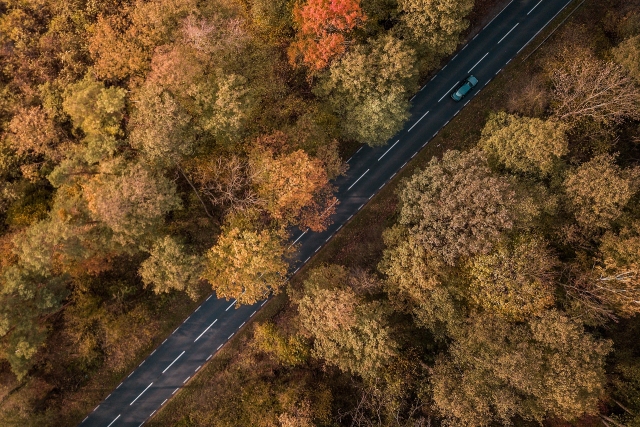
Together with colleagues from the USA, South Africa, the Czech Republic, Belgium, Great Britain and Canada we looked at 15 different roadkill projects and compared them with each other.
The idea behind it was not of a purely academic nature, but was very practical. We wanted to find out how the different projects work, who can take part, what data is collected and what consequences result from it. Based on the results, we would like to try whether it would be possible to link all these projects together to create a global roadkill reporting system. Such an approach would make it possible to show even more clearly the impact of road traffic on biodiversity.
If you would like to know more about the recommendations that have been developed for similar projects and how the projects developed for public authorities or for road maintenance companies differ, you are welcome to read the original article that we have linked at the end of the blog.
Abstract:
Globally, wildlife-vehicle conflict (WVC) fragments wildlife populations (due to road/traffic-aversion), kills and injures individual animals, can cause wildlife population declines, may eventually contribute to local or total extinction of certain species, and can harm vehicles and drivers. Preventing WVC begins with recording locations of conflict, such as vehicle crashes, animal carcasses (roadkill), or animal behavior around roads, such as avoidance of roads or crossing-behavior. These data are ideally used to inform transportation policy and planning and to retrofit roadways and their structures to reduce WVC. We are collectively involved with or manage eight regional or national systems for reporting WVC in collaboration with volunteers and/or agency staff. In this review, we survey systems for recording WVC by volunteers and agency staff at different geographical scales, based on existing literature and our personal experience. We report the range of data collection methods, data management systems and data visualizations employed as well as discuss the groups and type of volunteers and agencies involved. We use our expertise and the global survey to provide methodological specifications based on current best-practice for collecting and using WVC data to inform transportation and conservation decisions. We conclude with a vision of next steps toward a global network of WVC reporting systems, that have clear and practical applications for improved conservation research as well as guidelines for management of road networks.
Unfortunately we could not afford to pay the $3000 for a free-access publication, but we got permission from the publisher to publish a so-called "pre-print" version of the article. This means that under the following link you can read a version of the article, which still contains a few small typos, but otherwise has the same content as the original article: https://zenodo.org/record/4276898
If you have any questions regarding this article, please feel free to post them in our blog post on Österreich forscht in the comments.
Igel
Warum werden gerade so viele Igel gemeldet? Antwort darauf gibt unser neuer Blogeintrag auf Österreich forscht. Folgt unserem Team-Blog!
Halbjahr 2020
Was wurde eigentlich 2020 bisher gemeldet? Auf diese Frage antworten wir in unserem neuen Blogbeitrag auf Österreich forscht.
Umfrage
Bitte schenken Sie uns 3 Minuten Ihrer Zeit um die Umfrage zum Projekt Roadkill während Corona auszufüllen: https://survey.boku.ac.at/index.php/345249?lang=de
Spotteron

Spotteron GmbH has been supporting the Roadkill project since 2015 with the development of the apps and the project website. Due to the intensive cooperation over the last years it was possible to perfectly combine the existing knowledge on both sides to develop tools not only for the project Roadkill but for the whole Citizen Science Community. Spotteron develops its apps modularly so that functions that are financed and implemented by one project are also available to the other projects on the Spotteron platform.
In the last few years we were able to successfully implement the important functions of the offline use of the maps in the apps, the comment function below all entries or also important functions in the backend. Through constant exchange both sides, scientists and developers, learn enormously to achieve the best for the Citizen Science Community from both views.
We would like to thank the team of Spotteron GmbH for their support over the years and look forward to further fruitful cooperation.
Fourth scientific article from the project published

Recently a new peer-review article on our project was published. Together with colleagues from Belgium, the Czech Republic and the UK, an article was written about the benefits and challenges of working with volunteers in roadkill projects. In 4 projects we worked with very different groups. The complete article is of course freely available at: https://www.sciencedirect.com/science/article/pii/S1617138119303449
The abstract:
Daily, a large number of animals are killed on European roads due to collisions with vehicles. A high proportion of these events, however, are not documented, as those obliged to collect such data, only record a small proportion; the police only register collisions that lead to traffic accidents, and hunters only collect data on game wildlife. Such reports disproportionately under-records small vertebrates such as birds, small mammals, amphibians and reptiles. In the last decade, however, national wildlife roadkill reporting systems have been launched, largely working with citizen scientists to collect roadkill data on a national basis that could fill this data gap. The aim of this study is, therefore, to describe for the first time, existing projects in Europe, and the user groups that submit data to them. To give a deeper understanding of such projects, we describe exemplar scientific roadkill reporting systems that currently exist in Austria, Belgium, Czechia and the United Kingdom. We define groups of people who contribute to such citizen science activities, and report our experience and best practice with these volunteers. We conclude that volunteers contribute significantly to collecting data on species that are not typically recorded in official databases. To ensure citizen-science projects perpetuate, (I) volunteers need to be motivated by the organisers to participate on a long-term basis, (II) volunteers need support in identifying roadkill species where required, and (III) regular feedback is required on how their contribution is used to produce new scientific knowledge.
apodemus
We are very happy about our new partner in the project: "apodemus" the private institute for wildlife biology: https://roadkill.at/en/successes/cooperations/item/249-apodemus
westrad
A new entry in our teamblog! Westrad writes about his motivation to be part of our citizen science project: https://roadkill.at/en/about/teamblog/item/247-team-blog-vii-westrad
World Animal Day
On the occasion of the World Animal Day we would like to thank you all very much for your time in the project! We are looking forward to the continuation of the great cooperation!
apodemus
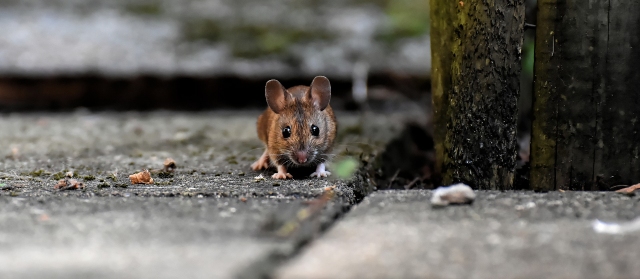
The private Institute for Wildlife Biology is specialized in small mammal species and for many reasons a perfect partner for our project. On the one hand, the staff members have great expertise in the field of nature and species conservation, which they have already proven in numerous projects. On the other hand, the institute is also known for its knowledge in animal preparation, which is enormously important for the identification of species and especially helps to identify the road-killed small mammals in the project. In addition, through the coordination of www.kleinsaeuger.at, they also bring with them extensive experience in citizen science.
The cooperation with apodemus enables us to have the entries on small mammals reviewed again by experts in this field, who may point out mistakes to us! This is a great enrichment for our project and directly increases the data quality.
We are very happy that apodemus supports us in our project and look forward to the future cooperation.